Showing posts with label learning. Show all posts

Monday, 16 January 2017

Music Video Analysis: Daughter - Numbers


Music Video Analysis: Daughter - Numbers

Directed by Iain Forsyth and Jane Pollard, the music video for 'Numbers' is that of a conceptual piece that doesn't really bare any relation to the lyrics. Instead, I believe it is more of a social commentary of social identity and growing up in a modernised society - both commenting on how the world is cruel, warped and in some cases distorted, as well as commenting on how people exist through what they perceive to be as "perpetual pain". 

RELATIONSHIP BETWEEN LYRICS AND VISUALS

Overall, I could make no distinctive link between the lyrics and the visuals, purely because there were no objects or motifs that solely related to what the song entailed. However, with this being said, the concept of being "numb" was highly evident, as shown through a variety of wide angled and tracking shots that showed the lack of emotion of the lead actress, Natasha O'Keefe. Although the video is conceptual, there are elements of performance within the music video; as seen through wide angled camera shots of a band (the lead singer an old man, and the actual singer of the band 'Daughter', acting as a bassist) performing under brooding, low-key lighting. In this sense, I can make a link between the visuals and lyrics, as there is an obvious element of lip-synching: a convention of a performance style music video. 

GENRE CHARACTERISTICS

Upon first watching the video and already knowing that 'Daughter' is an ambient pop and dream pop group, the music video definitely conformed to the codes and conventions of the genre. For starters, the genre of dream-pop tends to add an element of subtle surrealism to any product. In terms of this music video having an element of "surrealism" to it, it makes the audience question things that inevitably evokes a response from audiences that force them to question the aesthetics of the video, as well as the deeper, perhaps didactic meaning of the product. As my aforementioned point states, the video draws heavily on how we live vicariously through a modernised society, constantly changing our personal identity to suit that of the agenda of the time - yet, we're possibly unaware of the damaging effects that it has on us. An obvious convention of a dream-pop music video is the vast amount of low-key, cool-hued lighting, that in turn evokes a melancholic response from the audience as well as suiting the overall aesthetic. In contrast to this, there were also moments captured within the video (exhibited through wide-angled and tracking shots) that showed neon, vibrant, high-key lighting that had a soft glow to it - reinforcing the genre convention of ambient-pop, as the soft glow of the neon lights added another dimension to the visuals, drawing the audience in and reiterating the atmospheric and brooding tone of the video. The directorial choice of not using quick-cut edited shots also conforms to the genre of dream-pop, as the smooth, continuous tracking shots reiterate a gentle flow throughout the video, adding continuity and allowing audiences to engage more with the genre of ambient-pop

LINEAR OR CLOSED NARRATIVE?

In this music video, there is a strong narrative that unfolds throughout the main body of the product - however, personally, it seems a little complex for audiences to fully engage with. The excessive amounts of enigma codes, such as the close-up shots of the deck of cards and the coin, pique audience interest, but makes them work harder in unearthing the narrative. Having watched the video numerous times, it is clear that there is a continuous narrative that flows throughout, but it is also a cyclical narrative, as it opens with a wide-angled camera shot of an apartment bedroom, and ends in the same way - suggesting that the narrative that the actress takes is both continuous and part of her twisted, deluded every day life. The music video is particularly interesting because as we follow the actress throughout the concealed streets of London, the camera directs our attention to several different people, such as the protesters, the homeless man and the woman that injured herself. In terms of a directorial choice, it could be inferred that the woman detaches herself from these things that she deems as "mundane" and unimportant - as she dismissively blows smoke into the faces of the protesters, lighting money on fire and tossing it at the homeless man and finally completely ignoring the injured girl. 

LOOKING/MODE OF ADDRESS

Deducing that the music video is in fact conceptual and isn't performance based, there is an absence of looking throughout the video, but only up until the very end where the lead singer of the band is shown through an extreme close-up and lip-synchs to the camera. Up until this point, the actress, Natasha O'Keefe, remains completely distant to the audience, showing her detachment through the same, nonchalant and emotionless facial expression. The idea of the actress distancing herself from the audience by failing to look directly at the camera, reinforces the message that I decoded from the video - she shows that she is perpetually numb and the lack of acknowledgment of the audience and camera, shows the lack of confidence that she has in herself and her personal identity. Perhaps, she also views the audience as being "mundane" and refuses to acknowledge us because of this - just as she did with the injured girl. 

MIS-EN-SCENE

Conceptually driven, the music video focuses on a girl and her struggle with personal identity and love in a world that does nothing but take from her, and only stresses that it is indeed a cruel world - as seen through the various other characters. The only way that she finds comfort in the world is taking from other people, hence the strong enigma codes of the deck of cards. Various close-up camera shots of the deck of cards, suggests that this is only a game to her; she is calculated and methodical in what she wants, and knows exactly how to get it. She seeks and she takes - relentlessly.  This is the only way to get back at the world from taking her personal identity from her. Considering that she dons a red, satin/silk dress, conjures up imagery of the stock character, the 'Femme Fatale'. Used in a lot of movies and music videos, the 'Femme Fatale' is typically depicted as a beautiful woman with bad intentions; usually to capture lovers. The element of Colour Psychology is again used here, with the colour red usually associated with love, danger, blood and death. O'Keefe searches for men to use and drain of life, with the death of the men happening right after she touches the deck of cards and the coin, and the men being drained of blood. The idea that she touches the deck of cards, shown entirely through high-angled close-up shots, suggests that she knows that she is playing a dangerous game, but this doesn't bother her, as she gets what she wants anyway. The video intimates that life is nothing but a game and a competition and suggests that life is fragile if put into the wrong hands.

The low-key lighting of the video allows for an emotive response from the audience as it follows the harrowing tone of the visuals. In terms of empowerment and disempowerment, there was really no inference that I could make here, as although there were no high-angled or low-angled camera shots of the main actress, it was clear that she remained in a position of power as she was the central figure-head in the music video. The only power inference that I could make would be that of the high-angled shot of the deck of cards and how the woman would always be in a position of power if she continued to play the game of life and death.


Thursday, 5 January 2017

DigiPak Intentions for Cigarettes After Sex


Intentions for Cigarettes After Sex DigiPak

The intention for my own DigiPak for Cigarettes After Sex is that of combining inspiration from my research into alternative DigiPaks within the same genre, and my own photography. I was particularly inspired by Daughter's scratch, etching and distressed look as well as My Bloody Valentine's overlay technique. Combining the elements of these two in particular, I have conjured up an idea of what I want my final product to look like. 

When considering the mood and overall aesthetic that I am aiming for in my final product, I turned to the actual album art for my chosen band, and have made the decision to experiment with monochromatic images as well as the overlaying technique. The aim is to mirror exactly what I have produced in my music video, in terms of capturing and maintaining the grittiness of the footage and translate it into print form. All of the covers for the three albums that my band has released, have a solitary item or figure within the frame that has been edited to suit the genre of the band.

The overall aesthetic of my DigiPak will reflect my own interpretation of the song, with influences from prior album covers as well as inspiration from the external research I have conducted. Based off their prior album covers, I am going to ensure that I create a distressed and grungy look and incorporate elements of film grain or a burnt out film tape/photograph (used as an overlay) to mirror my interpretation of reminiscing and nostalgia of distant memories. This way, I know I am maintaining that link and I have evidenced a level of continuity between the music video, my interpretation, the band and the genre.

Overall, I want to maintain a sleekness to the DigiPak, but also maintain the relationship between each ancillary product. I am particularly interested in the idea of using scratched paint and/or scratched photographs as an overlay; as well as the wedding rings and hands (see previous post) to use as the focal point on the album cover.

Compared to the other influences, I will be ensuring that the name of the band is at the forefront of the DigiPak, as I believe that although they're an up and coming band, I would want to maintain that level of interaction with audiences, and I would do this by ensuring that the name is at the forefront of the DigiPak and in an appropriate font and size. To maintain the links with the music video, I will consider using a transparent overlay of flames on the album cover as well, as this holds symbolic value within my video and reiterates that relationship.

Monday, 26 September 2016

Research for the A2 Music Video


Research for the A2 Independent Music Video

My music video for the A2 Coursework is going to be situated within and inspired by the 'Indie' genre, slightly transforming it from the original genre of the song and the artist; which is contemporary R&B. I would like to stray away from the original genre of the artist as I don't feel as if it would be appropriate for the narrative that I wish to translate to my audience.

CODES AND CONVENTIONS OF AN R&B MUSIC VIDEO


My music video for the A2 Coursework is going to be situated within the 'Indie' genre, slightly transforming it from the original genre of the song and the artist; which is contemporary R&B. Typically, in an R&B music video, the codes and conventions are strictly suited to that genre; barely drawing parallels between others. The R&B genre is usually associated with sensual lyrics, accompanied by provocative visuals in order to successfully pertain to it's genre. Because of the nature of the lyrics (which are usually targeted at teenage girls and women), male artists such as Chris Brown and Usher are usually shown in music videos as being topless; this is because the music industry would want to attract a larger female demographic considering that this is their primary target audience. The music videos are filmed in certain settings, such as the beach, a night-club, or the artists own home; this is a convention of an R&B video as more often than not, this is the "go-to" location.
  • Apparel for male R&B artists isn't too extravagant and is a subdued version of the hip-hop genre, for example, hip-hop artists usually don excessive amounts of gold chains and other jewellery, but in the R&B genre, this is kept to a minimum. 
  • Tattoos are also shown to be prevalent in R&B music videos, thus making it an expected code of the genre.
  • As far as characters that are shown in the music video goes, the narrative usually follows two protagonists: the male artist and a female companion. Usually, the male artist is shown to be serenading a female actor, thus reinforcing the strong relationship between the visuals and the lyrics
  • Camera shot types range from extreme close-up shots, mid-shots and tracking shots. Extreme close-up camera shots are utilised to display the element of performance, such as lip-synching, and emotion as observed by the artist in order to form a relationship between artist and audience. Tracking shots aren't necessarily included in all R&B music videos, however, they make it easier for the audience to follow the narrative and ensure that the narrative is kept succinct. 

In comparison, female R&B artists are usually seen in music videos to be wearing minimal, provocative clothing in order to appeal to the male demographic. Because of this, female artists are more often than not seen as an object of desire are are blatantly objectified; this would be to suit the music industry demand, particularly concerning the genre of R&B.

The hair and makeup of the female artist is one of the most predominant features that is shown in an R&B video; used primarily to exemplify the sex appeal that the artists are notoriously supposed to have.

As a general rule of R&B videos, the notion of 'sexuality' is heavily acted upon and is used as an overarching influence in order to appease certain demographics. Sexuality is the most common influence for R&B videos and songs of which it is heavily reinforced through particular codes and conventions such as clothing, or a lack thereof, and makeup.


CODES AND CONVENTIONS OF AN INDIE ROCK MUSIC VIDEO 


In an Indie Rock music video, mis-en-scene is imperative as it's main purpose is to sustain a clear, succinct narrative that the audience can easily identify. This may be achieved through a limited amount of props or anything that correlates or offers iconography pertaining to the band. Typically, the mis-en-scene of an Indie Rock video features gritty, low-key lighting that is used effectively to invoke certain moods and responses from the audience. High-key lighting will only truly be prevalent in a music video where there is a sub-genre being represented, such as Indie-Pop; stemming from Indie Rock. Below are examples of an Indie Pop video (note the high-key lighting, vibrant colours) and an Indie Rock/Grunge video (note the low-key lighting, sombre/dark tones).

Indie Rock videos are laden with performance elements, such as lip-synching or a wide-angle camera shot capturing all band members performing the song through mime. Camera shots are also a very important feature of an Indie Rock video, most of the time wide-angled and extreme close up camera shots are utilised to make the band members known to the audience and therefore solidifying the strong relationship between the artist and the respective audience demographic. This idea of utilising specific camera shots allows for the integration of Richard Dyer's Star Theory, whereby audience members are so connected with a member of a band (usually the lead singer) that they imitate the actions, clothing or beliefs of the artist. There are three elements to Dyer's Star Theory:

  • A construction - whereby the star is manipulated through the music industry and is dehumanised in order to relate to certain audiences; they are stripped of all human attributes and are "constructed" in a way in which the music industry can benefit from. 
  • A commodity - similar to "construction", a star as a "commodity" simply means that the industry or label that the star is signed to, will use them as a way of making profit; this will be again, manipulated by the industry as they follow trends in other areas of the media that they know will work and attract the most audience attention
  • An ideology - this pertains more so to the audience interaction, in which the star is used to promote an ideology, or represent certain social groups/causes that will in turn gain audience interest, and therefore results in a highly established and devoted fan-base whereby the audience of the certain artist will start to believe in the values and morals upheld by the star.

Location is an important aspect of an Indie Rock video as it typically features an urban environment such as dark streets or the city - I will specifically use The 1975's music video for 'Somebody Else' as inspiration for my setting as it features a dark, melancholia-inducing street.

Editing is also a key feature in Indie videos. Camera shots tend to be quick-cut rather than slow and smooth; this is with the intention that the editing and quick cuts mimic the up-beat tempo of the music.

Artist iconography that pertain to the band is somewhat important as it allows the audience to visually connect, and identify with the band. For example, The 1975 are associated with three rectangular shapes that feature on tours and even on album covers. Imagery associated with Indie Rock bands are that of guitars, drums, a vocalist, bassist and pianist (in some bands).


ARTIST PROFILE


Stephen Wrabel, most commonly known by his stage name 'Wrabel', is an American singer/songwriter based in Los Angeles that confidently prides himself on his virtuoso skills and ability to play numerous instruments ranging from the piano to acoustic guitar. After attending Berklee College of Music for a year, Wrabel left Boston and headed to LA to further pursue his music career in songwriting.


After spending time in LA, Wrabel was eventually signed to Pulse Recording under the occupation as a songwriter; this was the artists first major breakthrough into the music industry. Soon after this, in 2012, he was signed to Island Def Jam wherein he released his first single, "11 Blocks", which was supported and promoted by well-known artist, Kesha.

Currently, Wrabel is signed to various labels such as Island Records, Universal and numerous international labels such as Digital Distribution Turkey, Universal Music Spain and Digital Distribution Panama.

Having been assigned to so many international and national labels, Wrabel has released two albums, 'Sideways' and 'Ten Feet Tall'. Wrabel gained recognition from Dutch DJ Afrojack, who was so impressed by Wrabel's brooding piano ballad of 'Ten Feet Tall', the two artists ended up collaborating with each other under a co-sign. Afrojack released various remixes of 'Ten Feet Tall', this in turn increased publicity surrounding Wrabel's image and gradually increased his popularity, nationally and internationally.


AUDIENCE RESEARCH SURROUNDING ARTIST

Statistics concerning The Weeknd (YouGov.co.uk)
According to Twitter research, Wrabel has a 54% male following, with the majority race being within the Caucasian demog
raphic (77%). As for his female following, there is notably less with only 46% of his followers being female. Considering that the artist is so low-key, audience research is significantly limited, however, I was able to compare artists of a similar genre to Wrabel so I could gather an average of the demographics such as age, political stance, gender and interests. A similar artist to Wrabel in terms of genre would be that of The Weeknd, who is known for his brooding R&B tunes, much like Wrabel. A comparison that I can make from the two sets of research is that the female demographic is relatively larger than the demographic for male listeners of The Weeknd in comparison to Wrabel.
Abel Tesfaye, The Weeknd

Analytics from Twitter concerning Wrabel (zoomph.com)
Another interesting comparison of a similar artist in the contemporary R&B genre is Beyonce. Drawing similarities in audience demographic in terms of the gender that takes the most interest in listening to their music, the female demographic certainly reigns supreme in this category. By having these comparisons readily available from reliable websites, I can tailor the way in which I create my music video to fit to each demographic equally.


Considering that I've already established a solid narrative, comprising of a mixture of boys and girls, this will be easy for me to achieve as it relates more to an open audience, as to leave more scope for audiences to infer the narrative and story of my music video.


Statistics concerning Beyonce (YouGov.co.uk)

AUDIENCE PROFILE: Primary & Secondary target audience

My music video will pertain to a male and female primary audience demographic, sitting comfortably within the age range of 17-20 year olds. The reason I have my audience target age so high is because of the nature of the video; the visuals will entail age-restrictive content such as consuming alcohol and smoking, therefore it would be inappropriate to advertise "illicit" activities to a younger demographic. The secondary audience will be audience members who are actively engaged with the Indie Rock genre, whereas when advertising the song, which is a synth/R&B track, the secondary audience would be viewers are interested with the respective genre of R&B.

Wednesday, 21 September 2016

Music Video Analysis: Glass Animals - Gooey


Music Video Analysis VI: Glass Animals - Gooey

Australian director-duo, Lily Coates and Gavin Young, formally known as 'The Apiary', brought new meaning to an idiosyncratic, whimsical music video that relies purely on a conceptualised idea with their video for 'Gooey' released in 2014 by the Glass Animals.

RELATIONSHIP BETWEEN LYRICS AND VISUALS

As the narrative unfurls, it is evident that the lyrics bare no relation to the visuals whatsoever, but however form a compilation of varying shots that define it as being a highly experimental video with psychotropic exploration in which the lyrics haven't been taken literally to influence the cinematography. When inferring meaning from the lyrics, it seems to be a song dedicated to the naivety of youth culture and subtly references a potential relationship. Through an initial watch of the video, it became apparent of the varying statuses of characters throughout the narrative, these were shown through low-angled camera shots that empowered the character but disempowered the audience; with the close-up camera angles revealing the characters that were blatantly devoid of emotion. In essence, throughout the video, there is an underlying message that seems to pertain to that of a power struggle between the characters, this is justified with the myriad of low-angled and high-angled camera shots specific to each character and their status within the video. It is only until the narrative reaches a mid-point that I am able to identify that the conceptual stimulus of the video is that of the 'Seven Deadly Sins'; or it is certainly depicted in this way.

GENRE CHARACTERISTICS

As an Indie Rock band, the music video certainly encapsulates the 'indie' genre, with minimal to no reference to the rock genre. However, the video exhibits less conventional codes and conventions that pertain to the indie genre. As the video is heavily conceptualised, there leaves mass scope for anything creative to be represented through the visuals, and as previously stated, the narrative follows that of the cyclical, repeated journey of 'The Seven Deadly Sins'. A more blatantly evident genre characteristic that appertains to 'indie culture' is that of the high-key lighting that remains constant throughout the entirety of the video. A music video for the 'Indie Rock' genre would usually have an element of performing in it from the band, but 'Gooey' is devoid of any relation to performance and features none of the band members, but instead relies entirely on the actors to further push the narrative along; therefore this music video subverts the typical expectations of an 'Indie Rock' video. 

LOOKING/MODE OF ADDRESS

Considering that the band aren't featured in the music video at all, and it is heavily reliant on the actors, the looking and mode of address is kept to a minimum up until the very end where a wide-angled camera shot captures all of the actors sitting on a sofa looking directly into the camera. This is the only time the actors directly address the camera. Personally, I don't believe that this was done with an intention to distance the actors from the audience as the video is more of a compilation of frames that forms a didactic purpose; to educate the audience of the sinister, cyclical cycle of 'The Seven Deadly Sins'. Because of the lack of the direct address to the audience, theories such as the Uses and Gratifications model remain partially unsatisfied, however, the audience may use this music video as a form of escapism as the video offers a complex yet bizarre narrative to pique audience interest and solidify some sort of deeper connection with them; thus compensating for the lack of mode of address

REPRESENTATIONS

The music video for 'Gooey' offers various representations, all of which have neither outlandish positive or negative connotations, and doesn't reinforce a particular stereotype. In this sense, the video is void of prejudice and racial stereotyping, although this doesn't seem obvious at first, with several viewings of the video, I was able to infer that age, race and stature bore no relevance to how the music video was shot, and was evidently based on their acting and dancing abilities. 


However, a striking representation that if anything, promotes body positivity is that of the wide-angled camera shot of the woman laying on the sofa, completely naked. This doesn't necessarily pertain to the ideology behind Laura Mulvey and sexual satisfaction of the male audience but rather has two inferences. One being that the nakedness of the women suggests an essence of vulnerability, the second being that it pushes the narrative forward as she is depicted as being 'Gluttony' from 'The Seven Deadly Sins'. Although, this may be inferred as being insensitive and inappropriate, I believe that it firmly reinforces body positivity, but is also reflecting the narrative.

LINEAR OR CLOSED & NARRATIVE AND/OR CONCEPT? 

As previously stated, the music video for 'Gooey' is highly conceptualised and takes the audience on a journey of 'The Seven Deadly Sins'. The narrative is cyclical in structure as the video opens with various close-up camera shots detailing the process of the sinister cycle with a scientific and psychedelic twist. What is interesting throughout the video is the minimal quick-cut or even slow-cut editing shots, and however only entails around 4-5 quick-cut jump shots to further pursue the narrative. Panning and tracking shots feature heavily in the video, as a rigged camera follows the actors from room to room in an abandoned mansion. This idea of slow, panning and tracking shots emphasise the smoothness continuity of the deadly cycle of the sins. 

MIS-EN-SCENE

The music video allows for in-depth analysis and inference in terms of it's bizarre but unique mis-en-scene as it takes the audience on a psychotropic, free-flow journey. As briefly mentioned, the video essentially follows the evolution of 'The Seven Deadly Sins' and the repetitive nature of the concept. Wide-angled camera shots address each and every actor and defines their 'being' within the cycle; as the music video opens, the close up camera shots of the woman with gold embellished over her hands is represented as 'Greed'; this is due to the fact that 'gold' is usually associated with wealth and riches, and as the camera transitions into quick-edited shots, the making of the "essence" (the liquid) within the video is made by 'Greed' and passed on from person to person, hence, alluding to the idea that greed is capable of being felt by everyone and leads to the exposure of other sins. A panning, wide-angled mid-shot captures the younger girl representing 'Envy'. She has stolen the "essence" that 'Greed' created, and out of spite, passes it onto the man in red: 'Wrath'. Colour Psychology is yet again at play here, as the man donned in a red wrestling suit depicted as being 'Wrath', further reinforces that the colour 'red' more often than not connotes with anger or danger. Jealousy then transforms into anger, wherein the wrestler in red beats the man dressed in blue, whom is depicted as being 'Pride'. 'Wrath' eventually spits on 'Pride' which would be generally humiliating, therefore the wrestler in blue has gotten his pride hurt, and then turns to 'Lust'; the woman dressed in yellow, to boost his ego and forget about the misdeed of 'Wrath'. To further justify this idea of 'Pride' being affected by 'Wrath', the scene ends with a high-angled camera shot towering over the actor for 'Pride' but elevates 'Wraths' status with a low-angled camera shot. The woman representing 'Lust' leaves the man as soon as she gets what she wants from him; something that lust does is lead to instant gratification; therefore, a tracking shot captures the woman dancing as she exits through the door to enter another room where she meets the man representing the sin of 'Sloth'. A high-angled camera shot tracks the man depicting 'Sloth' as he wanders over to the woman on the sofa representing 'Gluttony'. Laziness and subdued attitudes is an instigator for gluttonous acts and the power of 'Gluttony' ends up acting as a fuel to power 'Greed' and her consumption of materialistic possessions.


The video exhibits constant warm hues complimented with high-key lighting but also outlines and exemplifies the battle of status and dominance between the sins by utilising scores of high-angled camera angles contrasted with low-angled camera angles; both of which are used in order to sustain a fluctuating narrative in terms of status. 

https://www.youtube.com/watch?v=IIA1XQnAv5s

Monday, 12 September 2016

Music Video Analysis V: Bryson Tiller - Exchange


Music Video Analysis: Bryson Tiller - Exchange

Directed by Rohan Blair-Mangatt, the music video for 'Exchange' was released in 2016 and follows a fragmented narrative in which the audience are taken back and forth between the past and present relationship featured within the video.

RELATIONSHIP BETWEEN VISUALS AND LYRICS

As previously stated, the music video follows the fragmented narrative of a past relationship and how Tiller and his respective lover wishes to rekindle. It is easy for the audience to establish a clear and solidified relationship between the visuals and lyrics because of how it is based entirely off the song, and bears no relation to a conceptually devised piece. The setting varies throughout the entirety of the video as the audience are taken on a journey from past to present-day and features a myriad of frames that feature intimate low-key lighting to vibrant high-key lighting. In terms of a successful relationship formed through the visuals and lyrics, a wide-angled camera shot features a radio with the overlaying track vocalising, 'everywhere she goes, they're playing my songs', as she looks over to the radio itself. This is significant as it reveals to the audience that she is aware that he is trying to reach her through other forms of communication, i.e. the radio and he wants to let her know that all of the songs are about her. Another example of when the relationship is established between the lyrics and the visuals is when Tiller says "blow dank" which translates to "smoking marijuana", whereby the visual of Tiller lighting up a 'joint' is mirrored with the lyrics. The lyrics themselves speak of heartbreak and redemption as Tiller is desperate to fix his past relationship and often mirror what the visuals are conveying to the audience.


GENRE CHARACTERISTICS

Tiller redefined the R&B music industry when he released 'Exchange' from the album TRAPSOUL in 2016 from the record label RCA. Typically, as a genre, R&B is associated with intimate and subdued visuals, both of which are present within the music video. The majority of the video is filmed with settings that feature low-key, warm lighting, further intensifying the intimacy that the audience would experience as Tiller recalls a past relationship; the stimulus for the entire music video and song itself. There is also an element of performance prevalent within the music video, as a high-angled camera shot captures Tiller lip-synching to the song whilst nostalgically looking out of a window. A further convention of the R&B/hip-hop genre would be that of the expected 'gold chains' donned by the artist; a wide-angled mid shot captures Tiller as he continues to perform to the lyrics of the song whilst also highlighting the two heavy, gold chains around his neck. An interesting feature to note about this music video is that the majority of scenes are shot in slow-motion; this further reinforces the intimate nature of the video and contributes to a typical convention of the R&B genre, whilst pertaining to the cynosure of the song, allowing the audience to appreciate the visuals a lot more.


INTERTEXTUALITY

Intertextuality features through a minimum during the music video for 'Exchange'. The only notable relation that one could infer from another media text would be that the opening of 'Exchange' is similar to that of the opening of 'Heartbeat' by Childish Gambino. This is recognised through the camera following the respective actor walking down a suburban street, adjacent to a fence and seemingly saddened or affected by another person, with a non-diegetic, melancholic beat running in parallel with the visuals (demonstrated through stills taken from both videos [BELOW RIGHT]). As Tiller continues to grace the music industry with his solemn and brooding releases, he gives a hint to the audience of a future music project, 'SHE'S GOT MY SOUL'.  Tiller is now known to go by the alias 'Pen Affleck' and hints that 'SHE'S GOT MY SOUL' may be a music project that is to be released after the platinum album release of 'TRAPSOUL', this is evidenced in the video through a wide-angled/establishing shot of a cinema. Aside from this, there seems to be no other distinct relationship drawn between other media texts and the music video for 'Exchange' but continues to exist on it's own for the remainder of the video.


LOOKING/MODE OF ADDRESS

Throughout the video, Tiller refuses to acknowledge the camera, therefore reinforcing the element of disconnect between artist and audience. Because of the overarching theme of the song, being it a homage to heartbreak and redemption, this would be expected as Tiller remains no way inclined to publicise the extent of his feelings as the non-diegetic, overlaid sound continues with it's melancholic beat accompanying the visuals and further pushing the story onwards as to establish a clear, but fragmented narrative. However, there is one direct address to the audience near the end of the video, where a close-up shot captures Tiller in a state of agitation, accompanied by harsh red, low-key lighting. There is an element of Colour Psychology prevalent here that establishes a foreshadowing of some sorts and as an interpretation, the general population would associate the colour red with either anger, love and/or danger. As the narrative ensues, the audience are aware that he drives "back and forth from Louisville to Lexington" to meet his ex lover, this highlights an element of danger, for fear that the girl won't reciprocate his feelings and he will have his heartbroken again; anger, so that the girl and him get involved in an argument or, finally, love; wherein the pair reconnect at the end of the video and rekindle the relationship. This close-up camera shot highlights to the audience that Tiller is indeed trying to connect with the audience as compared to at the beginning of the video where it could be inferred that he was reluctant in opening up about his feelings, but is now in a position to reconnect and accept the extent of what he feels for his ex lover.


LINEAR OR CLOSED NARRATIVE & NARRATIVE AND/OR CONCEPT?

As previously stated, the narrative is fragmented but is closed, as it seems to be that Tiller and his ex lover come to a state of reconciliation by the end of the video. The way in which it is fragmented is that the quick-cut and slow-cut camera shots jump back and forth between the past and the present, although bearing no significant detail as to how the audience would differentiate the two separate narratives much like in the music video for 'Everybody Talks'. In terms of complexity, the narrative exhibits no ambiguity or hidden subliminal message, therefore reinforces the idea that the music video was driven solely by the message of the song; which was to rekindle an old relationship.

STAR TREATMENT

Tiller operates as a sole artist under the record label RCA. As a new and up-coming artist within the music industry, audiences start to establish links between the artist and their music, such as through artist iconography. Albeit, considering that Tiller is new to the music world, not a lot of theory could be applied that would detail audience recognition as he is steadily building his fan-base with the release of the platinum album 'TRAPSOUL'. Although, the release of the album gained Tiller immense notoriety from the public with the single 'Don't' being released in early 2015 and started to solidify the franchise behind 'TRAPSOUL'. Throughout the video, Tiller is consistently seen by the audience as the narrative unfolds, with a variety of differing camera shots that establish his status and dominance throughout the video, but very rarely are there close-up camera shots of the artist.


MIS-EN-SCENE

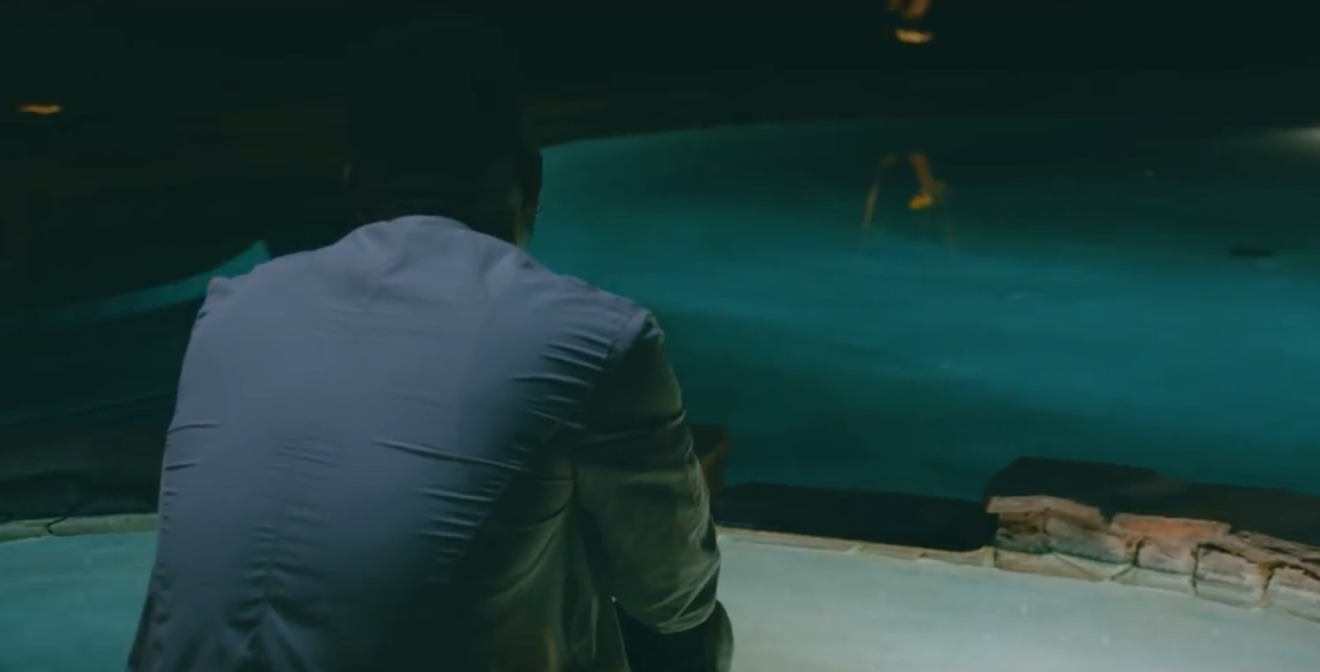
The video features a fragmented narrative, as the aforementioned point states, but however lacks in the diversity in setting. Because of this fragmented narrative, the audience are taken on a journey of a recollection of memories that are seen through wide-angled, high-angled panning shots of the pool and contrasted with a quick-cut edited shots of the past that are shown to the audience through low-key lighting and a mid-shot of Tiller. The significant contrast in camera angle and lighting are important as it highlights Tillers feelings at that time and ensures that the audience can distinguish a clear narrative and difference between the past and the present. Vibrant high-key lighting accompanied by a high-angled panning camera shot of Tiller enforces the happier times that he had during the relationship, although, a typical high-angled camera shot would disempower the artist (as shown through the still on the top right) and empower the audience; subverting the typical convention of the camera angle. However, this choice in camera angle could suggest that the relationship was known to the public, as the enforcement of power to the audience is suggested by us looking down on Tiller and his lover. Perhaps alluding to the idea that because the relationship went too public, it was inevitably what tore them apart. As the narrative continues, the sexualisation of the female ex lover is apparent to the audience and appeals to Laura Mulvey's ideology of 'The Male Gaze', in which female actors or performers are portrayed in such an overtly sexual or provocative way, as to satisfy the male population. An intimate, subtle high-angled camera angle portrays Tillers lover in a sexual light as it is accompanied by amorous low-key lighting, scantily dressed in frilly, white lingerie, while she seductively rubs her hands over the tops of her thighs. The colour white, in most senses, is associated with purity and 'virgin-like' attributes, however, the depiction of the woman and her 'purity' in this video is heavily subverted as she is objectified in order to satisfy the male demographic.


https://www.youtube.com/watch?v=aj9coPGuFkM

Sunday, 11 September 2016

Andrew Goodwin Music Video Theory


Andrew Goodwin Music Video Theory

There are many theories in Media Studies, all of which culminate to form certain ideologies about different media texts and forms, rarely are there ever theories that can be applied to the artistry of music videos, however. 

But, through the theory coined by Andrew Goodwin, studying and analysing the forms of a range of music videos has never been so easy, thanks to a checklist of features that amalgamate to create a successful music video.

The theory includes a checklist of seven key points that should work in complete synergy in order to form a music video. This checklist encompasses the series of codes and conventions that music videos should have in common, whilst reiterating the fundamental basis of all music videos, which is to have a strong, constructed link between the visuals, the song and the artist or band

Key features of Goodwin's Theory:
  • Typically, all music videos have unequivocal genre characteristics that would pertain to the specific genre of music being relayed to audiences.
  • There is almost always a relationship between the visuals of the video and the lyrics performed by the artists. 
  • Demands of the Record Label (i.e. Warner Bros.) will be evident within the video and represented by the artist.
  • Intertextual references are common, too.
  • The 'Notion of Looking' (such as the objectification of women and men - links to other theories such as 'The Male Gaze' theorised by Laura Mulvey) with features of 'Voyeurism', such as direct gaze, screen and mirrors and potential insight into the life of the artist
  • Artist Iconography/Star Image.
  • There is a strong relationship between the music and the lyrics.
Below, there are examples that further deepen the understanding of these key features of Goodwin's Theory that feature across a range of music videos and genres.


Notions of Looking/Voyeurism/Objectification

Taken from Childish Gambino's music video for 'Heartbeat'. (RIGHT)

Here we see Gambino (Donald Glover) directly addressing the camera through a cars rear view mirror. The song is a tribute to Gambino's 'True Love' or 'The One' and
not being able to be together. This direct address heightens the intense relationship between artist and audience as Gambino continues on to signify his heartbreak of not being together even though the pair are still in love, through the lyrics.


(LEFT) Taken from Shakira's music video of 'Can't Remember to Forget You'. 

Here we can see the blatant objectification of Rihanna as she is captured in a provocative pose in an effort to satisfy the male demographic; this is closely linked to Laura Mulvey's theory of 'The Male Gaze'. 


(LEFT) Taken from The 1975's music video for 'Love Me'.

This still shows Matt Healy looking directly at the camera without the use of mirrors or screens. The element of voyeurism is present as we are watching Healy perform the song through an extreme close-up camera shot. 

(BELOW) Taken from Carly Rae Jepsen's music video for 'Call Me Maybe'.

This is an example of male objectification in order to satisfy the female demographic, more often than not, males who are objectified are usually portrayed without a shirt revealing the upper torso, in comparison to the objectification of women who are seen scantily clad, filmed with high-angled camera shots that further the objectification.

Genre Characteristics

Examples that pertain to the genre of rock and what would typically feature in a music video for that specific genre, would be that of the entire band performing, usually filmed through a wide angled, level shot so that it sustains the equality of the entire band instead of focusing on a sole member. 

Taken from the Red Hot Chili Peppers music video for 'Californication'. 

Every band member is present here which enables the audience to identify more with the music as they can see the full involvement of the band. The wide angled shot represents the band and it's unity, straying away from any misconstrued ideas about status as they are captured on a levelled shot. 


Taken from The 1975's music video for 'UGH!'.

Although the faces of the band members cannot be seen by the audience, they are still aware that the band performs together, solidifying the sense of unity within the band itself. 


Intertextual References

The concept of intertextuality makes the audience feel superior if they know elements of other media forms have been included in others. Intertextual references are always exciting to find and increases audience engagement with the media form, whether that is through a film or music video. 

Thirty Seconds To Mars released a music video for 'The Kill (Bury Me)' in 2010 that was heavily influenced by Stanley Kubrick's, 'The Shining'. The intertextual references are outstanding and somewhat follows a similar narrative to that of the actual film. 

Here are stills taken from the music video and the film that depict an intimate moment between two 'unorthodox' lovers.


Another scene of comparison is when Nicholson is alone in the main hall and starts to throw a tennis ball up against the wall, this is also shown in the music video where Jared Leto also throws a ball at a wall. Comparing the camera angles, the music video still shows a wide-angled shot that captures the momentary interlude where Leto continues to lash out at a wall with a tennis ball, there is an absence of diegetic sound.

The camera angle that captures Nicholson throwing the ball at the wall is also a wide-angled shot, but masks his face as it is filmed from behind. A similarity that can be drawn from these two stills is the limited lighting, which is inferred as low-key. The low-key lighting reflects the sombre mood of both the film and the music video as the narrative unfolds.
Although in terms of colour palette the two media texts differ, the music video follows the majority of the narrative as directed by Kubrick in the film. Compared to the film, the music video is bleak and features a desolate hotel, whereas the film depicts a wintery setting with warm hues and ornate walls.